About Us
Our Story
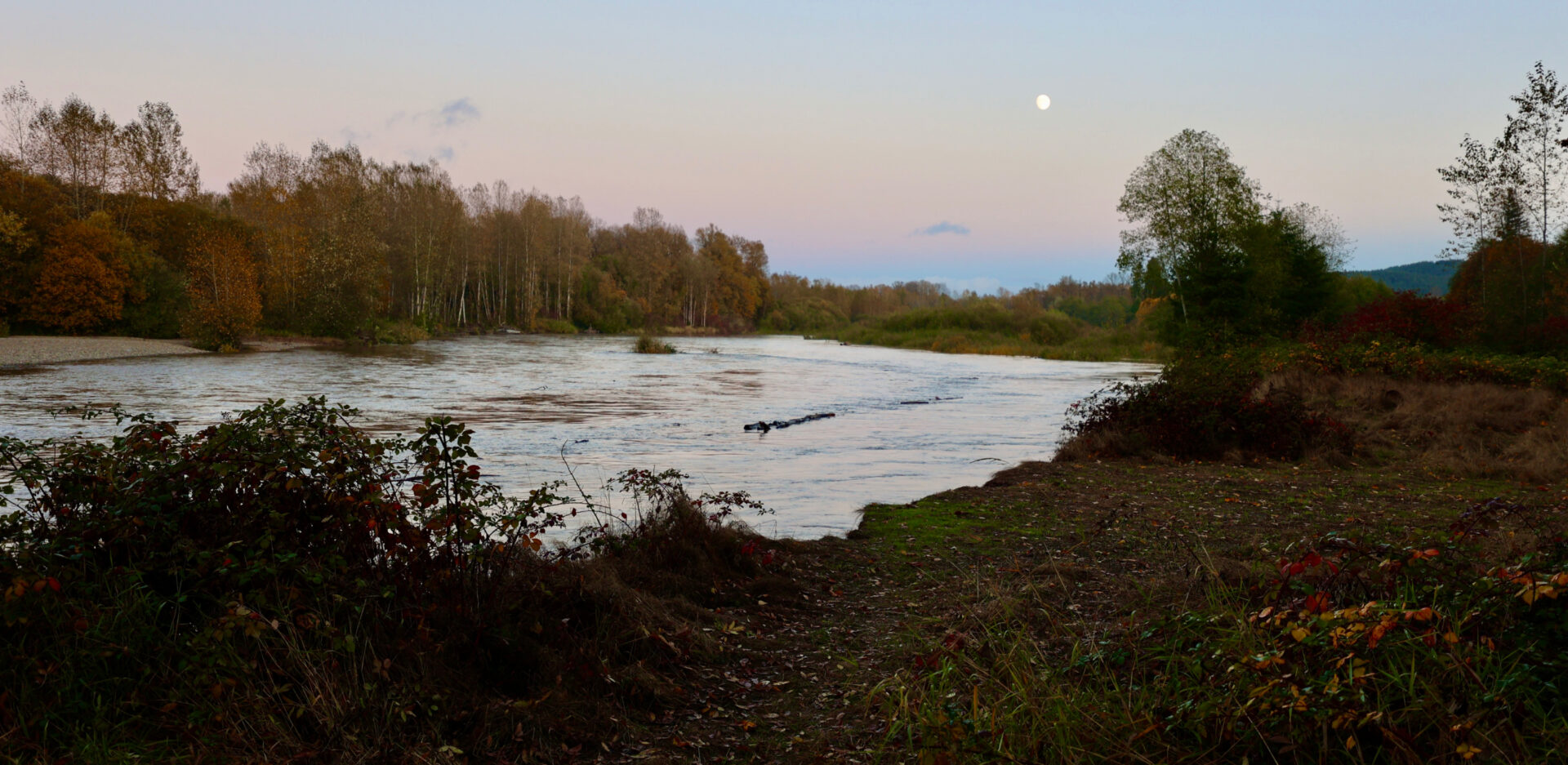
The Confederated Tribes of the Chehalis are comprised of many smaller bands and villages that originally inhabited the land from Mud Bay in the north to the Columbia River in the south, and from the foothills of Mt. Rainier in the east, to the Pacific Ocean in the west. In 1824, trader Alexander Ross noted Chehalis was one of the ten most important Tribes in the present-day southwest Washington region.
Some of the bands and villages that comprise the present-day Confederated Tribes of the Chehalis are,
- Upper Chehalis, also known as Kwaiailk
- The sqwayayilq on Mud Bay
- The tmesluws located around the present town of Tenino
- The ?ilwaiqs across the river from the present city of Chehalis
- The c’axwasn in the Pe Ell – Boistfort area
- The slacawams whose location is uncertain, but was presumably near the Oakville-Porter area
- Lower Chehalis
- Halloweena Nation
- Willopah also called Kwailhiokwa or Owhillapsh
- Klatskanai
- Humptulips
- Hoquiams
- Whishkah’s
- Wynoochee’s
- Lower Chinook
- Cowlitz
- Satsop
The name Chehalis originates from a village at the entrance to Grays Harbor at Hanson’s Point near present-day Westport. Formally known as Tshels or sand, this village was the first village encountered by non-Native people entering Grays Harbor, formerly known as Bullfinch Harbor. Not understanding that village names were not the names of Tribes, but names of places, the non-Natives assumed the Tribe’s name was Tshels. As the non-Natives travelled inland further into the Harbor, they would have encountered seven Chehalis villages located on the north end of the harbor and eight villages on the south side. Noting the similarity between the villages and the people, the non-Natives assumed all people they encountered were Tshels and called them as such. This is the name we call ourselves today, Chehalis, People of the Sands.
Other permanent Chehalis villages were Sah-tsah-ulth or river coming from the lake, located on the Black River, Thla-qah-mish at the mouth of Cedar Creek in former Cedarville, WA, and Wah-lokt-un or place to fall down on Michigan Hill. Chehalis families also maintained villages sites throughout the region, from present-day Olympia, WA to the Chiltz village site along the Columbia River. The Lewis and Clark expedition recorded a meeting with Chiltz (Chehalis) on November 21st, 1805. Village sites were also located at present day Rainbow Falls, Grand Mound, Centralia, Chehalis, on the Newaukum River, Satsop River, and along the seacoast and present-day Interstate 5.
Mission & Vision
To be a thriving, self-sufficient sovereign people; honoring our past, serving current and future generations
Core Values

Ethics

Culture

Community

Service

Sovereignty
“Yea, the upper Chehalis, you see we started, that is as a tribe, from Mud Bay, don’t know where they come from there, they moved in there from somewhere and they begin to grow and spread back until they come to the Chehalis River, then they started to settle down. That was a long time ago, I’d say maybe, maybe a hundred thirty thousand years ago because this America wasn’t made in just one, two days – maybe been here the last million years and the people, Chehalis Indians had settled down and was already here when the white people came, each brand of the Chehalis Indians had settled down where there was good pickings, good hunting and good fishing and maybe camas and other roots and berries. The cedar, they felled that and made boards out of it some 4 feet thick….they used elk horn for wedge” Chehalis Tribal Elder, Silas Heck (1964, p. 3)
Commonly Asked Questions About the Chehalis Tribe
Upper Chehalis and Lower Chehalis were the predominant languages of the region pre-contact. Both languages are a dialect of the Tsamosan branch of the Southwestern Coast language family and are what is called a language isolate, meaning these languages are distinct from the languages spoken by the surrounding Tribes. Upper Chehalis had two sub-dialects, Chehalis 1 or Oakville Chehalis, spoken from present day Grand Mound to Oakville, and Chehalis 2 or Tenino Chehalis, spoken from Grand Mound to Tenino. Upper Chehalis eventually became the principal language of all Chehalis Tribes.
Traditional Chehalis homes were longhouses and built along rivers and waterways. The homes were a type of gabled longhouse with a doorway facing the water and were constructed of vertical planks, with a pitched plank roof, and seams lined with moss. The houses had circular doors that required a person to bend over to enter, often putting their feet through the door first and then bending the rest of their body in. The doorway was covered with a mat to protect against the weather and many had a rear door which could be used to escape in case of attack. Some longhouses were large enough to have five or six fires burning inside for cooking and warmth, and holes in the roof let the smoke from the fires escape. As many as ten or twelve families could live in a longhouse, depending on the size of the house.
During the spring and summer, Chehalis would travel from their permanent village sites to temporary, waterproof structures constructed of cattail mats and fir or alder saplings. These temporary homes were used when the families moved to summer encampments for hunting and gathering seasonal foods such as roots and berries.
Chehalis traditionally ate a variety of meat, berries, roots, fish, and shellfish. The list below is an example of the most common foods the Tribes harvested and ate. It is not a comprehensive list.
- Salmonberry Shrub: branches were peeled and eaten like carrots, salmonberry sprouts were called “bear candy” and eaten as snack.
- Strawberries, salmonberries, blackberries, huckleberries and raspberries were eaten fresh.
- Blue and red elderberries could be eaten fresh or steamed on rocks and stored in a container or cool water.
- Dried sturgeon, clams and sea oil were eaten and traded with other Tribes.
- Clams, flounders, oysters, salmon, shellfish and many other types of fish were common. The Tribes had a robust trade network with San Franciso, CA ports, oysters and clams being the most popular trade items. The Olympia oyster was eventually transplanted to the bays of San Francisco and is now grown there as well.
- Deer, elk and other animals
- Eels were caught by rubbing leaves of a resinous plant on the hands and then grabbing them from the water
- Camas – often laid on a fire and them covered with earth and ferns and left to steam for almost two days
Of course, walking is a common form of transport and was employed often. Chehalis Tribes also commonly used a type of canoe called a shovel-nosed canoe. This canoe was mostly used inland and was known for being tippy, it had a rounded prow and stern and sloped upwards towards a squared end. Larger, more stable canoes were used for the ocean, bays and sound. Sometimes sails were attached to the larger canoes and these sails also doubled as tents during travel.
Upper Chehalis were known to have horses for use on the Upper Chehalis prairies. Our horse herds were not as large as the herds Tribes owned elsewhere but horses were a common form of transport. Horses were incorporated into the trade routes which moved in from other regions even before the Tribes encountered our first non-Native people.
The Chehalis Tribes participated in a treaty council assembled on the banks of the Chehalis River near present-day Cosmopolis in February of 1855. The federal government was proposing to move the Chehalis Tribes to another reservation far north of their traditional villages and homeland. After three days of negotiations, the Tribe could not reach an agreement with the government negotiators and a treaty was never signed.
In July 1864 the United States secretary of the interior signed an executive order establishing the Confederated Tribes of the Chehalis Reservation near present-day Oakville. This is the reservation where our Tribe lives today. Located in Upper Chehalis territory, the reservation became home to many of the Tribes who comprise the Confederated Tribes of the Chehalis. Two more executive orders, one in 1886 and one in 1909, followed the original executive order. The Confederated Tribes of the Chehalis Reservation are what is known as an “executive order Tribe,” we are not a “treaty Tribe”.