1855
Fort Henness
Fort Henness was established near present-day Grand Mound, contributing to increased trade and interactions with non-Native people.

Fort Henness was established near present-day Grand Mound, contributing to increased trade and interactions with non-Native people.
During the conflicts commonly known as the Indian Wars of the 1850s, some Chehalis people lived on a temporary reservation along the Chehalis River near present-day Centralia. The land was owned by Judge Sidney Ford and B. C. Armstrong. Other Chehalis people resided at Fort Steilacoom near present-day Lakewood.
Several Chehalis people were living on land within the Upper Chehalis territory that now forms the present-day reservation. Later that year, the government agreed to reserve the land for future development.
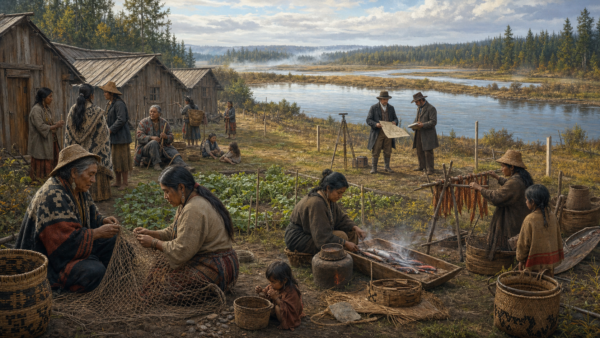
Camp Chehalis, also known as Fort Chehalis, was established in present-day Westport but never received an official designation.
The Homestead Act was passed.
Approximately 300 to 400 Chehalis people lived on the land that now forms the present-day reservation.
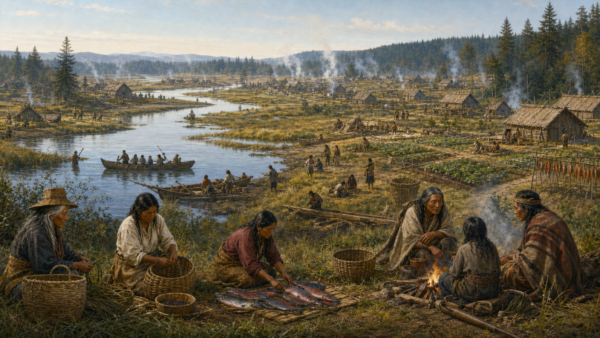
The United States Secretary of the Interior signed an executive order setting aside 4,214.83 acres for the Chehalis, Cowlitz, and Chinook Tribes, establishing the land base of the present-day Confederated Tribes of the Chehalis Reservation.
Construction began on a school building on the Chehalis Reservation, but frequent turnover among the Indian Agents assigned to the reservation delayed its completion for several years.
Agent R. H. Milroy recorded approximately 600 Tribal people living on the reservation. This population included members of the Lower Chehalis, Upper Chehalis, Chinook, Shoalwater Bay, Clatsop, Humptulips, Cakokian, and Cowlitz Tribes.
The Chehalis Tribal School opened with a staff consisting of a matron and a teacher, serving an initial enrollment of 24 students.

420 Howanut Rd
P.O. Box 536
Oakville, WA 98568
Monday to Friday
8:00 am - 4:30 pm